Public comment period for County Fair fee changes open

FLAGSTAFF — The public can comment on proposed County Fair fee changes until April 6. The 60-day comment period on the proposed fees affects vendors, open livestock entries and 4-H wristbands. The Coconino County Board of Supervisors reviewed the fee changes, which have not increased since 2006, at the regular meeting on Jan. 28

The Board may consider any increase or change up to the amount proposed by the department but not anything higher. The Board could approve the fees any time after the 60-day comment period ending April 6, 2020

Coconino County Parks & Recreation (CCPR) manages the Coconino County Fair. CCPR suggested the fee changes to recover costs due to increased prices for goods and services, to align with industry best practices and to moderately increase revenue without impacting the cost to fairgoers. Fees also help offset damages to the Fairgrounds at historic Fort Tuthill Quad, which had a $4.1 million renovation in 2017.

The following is a summary of the proposed fee changes:

Coconino County Fair Vendors

  • Food Vendor fees change from a square footage fee to a minimum guarantee based on frontage against a percentage of gross revenue.
  • Amusement Vendor fees change from a percentage to a square footage fee.
  • Commercial & Non-Profit Vendors will see a nominal increase in cost per square foot of space rental.
  • A refundable deposit will now be required to account for damages, staff time outside of scheduled hours and violating rules set forth in the contract.

Open Livestock Entry

  • Open Poultry and Rabbit & Cavies fees increase from $50 to $1 per entry to offset a portion of the cost of feed and bedding supplied by the Fair.
  • Open Horse fees increase from $3 to $5 per entry to offset a portion of the cost of supplies associated with the Fair Horse Show.

4-H Wristbands (applicable to 4-H youth and parents only)

  • 4-H Adult Admission Wristband (includes unlimited days and parking) fee increases from $20 to $25.
  • 4-H Child Admission Wristband (includes unlimited days and parking) fee increases from $12 to $15.

For more information on the proposed fee changes and to provide comments, visit Coconino.AZ.Gov/Parks.

ADEQ issues fish consumption advisory for two northern Arizona lakes

PHOENIX – The Arizona Department of Environmental Quality (ADEQ), in association with the Arizona Game and Fish Department (AGFD), is issuing a fish consumption advisory for black crappie caught from Santa Fe Lake in Williams in Coconino County. There is also a fish consumption advisory for largemouth bass caught from Horsethief Basin Lake in Yavapai County and south of the community of Crown King. This advisory is based on recent analysis of fish tissue data that indicate elevated levels of mercury.

ADEQ recommends that adults limit consumption of black crappie from Santa Fe Lake or largemouth bass from Horsethief Basin Lake to 2.5 ounces (uncooked weight) per week and children 12 years of age and younger limit consumption to 2 ounces (uncooked weight) per month. Santa Fe Lake is home to a variety of fish. During the spring and summer, AGFD stocks the lake with rainbow trout, which can be eaten in unlimited amounts.

Generally, contaminant levels found in water are significantly lower than those found in fish tissue. Therefore, fishing, bird watching, swimming and other recreational activities at the lake are not affected by this advisory and are encouraged for enjoying the great outdoors.

Fish are an excellent source of protein and can be an important part of a healthy, diverse diet as they are low in saturated fat. The American Heart Association recommends people eat at least two fish or seafood meals every week. The public health recommendations in this advisory are based on frequent and long-term consumption of fish, not infrequent or occasional fish meals. AGFD and ADEQ maintain a Green Light Fisheries program listing fish species from specific waters that may be consumed without limits.

See Interactive e-Map for Green Light Fisheries and Fish Consumption Advisories

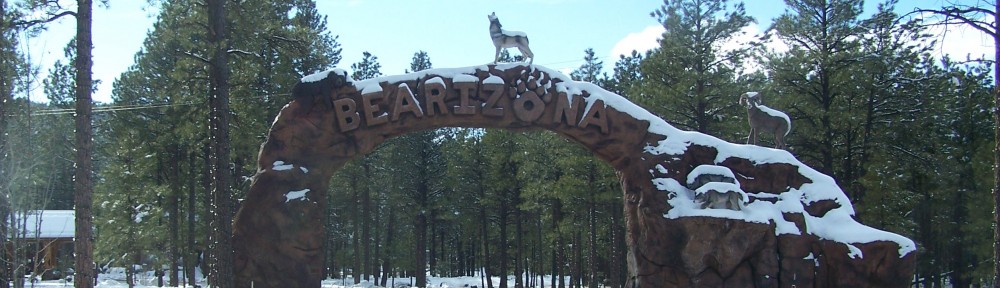
Bearizona Welcomes Vernon the Bald Eagle on Veterans Day

WILLIAMS — Bearizona, a popular drive- and walk-through wildlife park devoted to providing homes to wild animals in need, is introducing its first bald eagle on Veterans Day. He was named Vernon by the winner of the company’s recent naming contest that reached over 30,000 animal lovers across Facebook, Instagram and Twitter and was shared 124 times in just 24 hours.

The contest called for all Bearizona fans and supporters to submit a name appropriate for such an incredible animal that represents the strength and freedom of America ahead of the national Veterans Day holiday. The winning name was chosen out of 850 fan entries and honors George Washington’s Mount Vernon estate. Vernon is especially fitting since the first president of the United States and Bearizona’s first bald eagle were both from the great state of Virginia.

After he was seen fighting with another eagle in what was likely a territorial dispute and suffered injuries affecting his ability to fly, Vernon was rescued by the U.S. Fish and Wildlife Department and made his way to multiple facilities over the last decade before finding his forever home at the Bearizona Wildlife Park, where he will have the space and care he needs to thrive.

“He’s very shy, but he loosens up after a few fish,” said Susan Davidson, founder of High Country Raptors. “The staff continues to learn more about him and his likes and dislikes every day, and we are doing our very best to keep Vernon feeling as comfortable and safe as possible in his new home.”

Visitors will be able to visit Vernon for the first time, along with the rest of the Bearizona residents, on Veterans Day, this Monday, Nov. 11. Free admission will be offered to all individuals currently serving in or who have honorably served in the U.S. military.

“Eagles are becoming more common here in Virginia and I see them a couple of times a month. My heart still jumps in excitement when I see one,” says contest winner, Laurinda Bowling of Bland, Virginia. According to Savannah Carleton, a second contest winner who chose the name Vernon, “Since the bald eagle is from Virginia, it seemed perfect for his name to be Vernon. But when I saw someone else had suggested it, I just decided to ‘second’ their vote. It’s always fun to participate and vote when an Arizona park gets a new member and the community gets a voice in the process.”

Quail outlook: All signs point to better season in 2019-20

PHOENIX — Truth be told, Arizona’s quail hunters are also weather wonks — always checking the forecasts, particularly during the winter months, their fingers crossed that the wet stuff is on the way.

After all, good doses of timely precipitation that time of year are what give the state’s Gambel’s and scaled quail populations a much-needed boost, which usually points to better hunting in the fall.Case in point: Winter 2018.

“Unlike the past few years, when hatch dates were spread out over the spring and summer, strong winter precipitation patterns this last winter should have concentrated hatch dates for quail clutches,” said Johnathan O’Dell, small game biologist for the Arizona Game and Fish Department.

“More quail chicks on the ground at the same time usually correlates to better overall brood survival and more birds in coveys in the fall. Spring call counts around the state were up 125 percent from the 10-year average, so Gambel’s numbers and harvest should be better than last year’s numbers.”

Translation: Expect to find a few more birds to chase when the 2019-20 season opens Friday, October 18.

While there will be a few hot spots out there, O’Dell said hunters should prepare to put in the work to find them.

“Anecdotal reports from hunters in recent years suggest that quail numbers and coveys vary by location, so it would be worthwhile to do some scouting,” he said. “Even with one good year of production — and hopefully more to come — statewide numbers will expectedly be lower than historical numbers, but hunting Gambel’s this fall should still be exciting.”

Meanwhile, hunters should note that the season for Mearns’ quail doesn’t begin until December 6. It’s summer rainfall that plays a key role in nesting success and population numbers of this species. After a spotty and relatively weak monsoon across southern Arizona, these birds are likely to be abundant only in pockets that received sufficient precipitation this summer.

A valid Arizona hunting or combination hunt and fish license is required for all hunters 10 and older. Those hunters under 10 must either have a valid hunting or combination hunt and fish license, or be accompanied by an adult who possesses a valid hunting or combination hunt and fish license. Licenses can be purchased online or at license dealers statewide. A youth combination hunt and fish license (ages 10 to 17) is $5.

The general bag limit is 15 quail per day in the aggregate, of which no more than eight may be Mearns’ quail (when the Mearns’ season opens December 6). The general possession limit is 45 quail in the aggregate after opening day, of which no more than 15 Gambel’s, scaled or California quail in the aggregate may be taken in any one day. After the opening of the Mearns’ season, the 45-quail possession limit may include 24 Mearns’ quail, of which no more than eight may be taken in any one day.

Outfitters, guides invited to apply for commercial services on Flagstaff Ranger District

FLAGSTAFF — The Flagstaff Ranger District of the Coconino National Forest is soliciting proposals from prospective outfitter and guide companies interested in providing commercial services to the public from October to December 6.

Opportunities to provide commercial services include mountain biking, day hiking, trail running, rock climbing and more. The various services are limited and are only available in the Mount Elden and Dry Lakes Area as described in the prospectus.

Proposals for additional use on existing special-use permits, as well as a limited number of new permits, will be considered. A Forest Service panel will select applicants through a competitive process based on written applications.

Applicants are advised to read the prospectus and appendices carefully. All items listed under Application Package Requirements must be complete and included for submission.

Applications submitted in response to this prospectus are subject to Cost Recovery pursuant to 36 CFR 251.58(c)(3)(iii) and will be collected through an application fee.

Applications must be received by close of business (4:30 p.m.) Dec. 6. The final decision on issuance of a special use permit will be contingent on compliance with any needed environmental analysis as determined by the National Environmental Policy Act.

The prospectus and supporting documents are available on the Coconino National Forest website. Paper copies will be made available upon request.

For questions related to this potential business opportunity, please contact Kevin Lehto at kevin.lehto@usda.gov or 928-527-8287.

Input sought from elk hunters to help guide management of state’s herds

PHOENIX — The Arizona Game and Fish Department (AZGFD) is asking all elk hunters to submit data from their upcoming hunts to assist the department in managing the state’s herds.

AZGFD’s goal is to receive a completed questionnaire from each hunter who was issued a hunt permit-tag, whether or not that hunter harvested an elk or participated in a hunt. AZGFD will use that data to estimate harvest and hunter participation, along with population surveys, to set hunt permit-tag numbers.

A questionnaire will be mailed (or emailed) to each elk hunter, to be completed and returned to the department after the hunt. Other options include using a link or scanning a QR code, which are located on the back of the questionnaire. A questionnaire and link also can be found on the reverse side of the hunt permit-tag.

Meanwhile, hunters who are successful harvesting a bull elk in Game Management Units 1, 9, 10 or 23 are being asked to submit a tooth from the animal. These units are managed under alternative management guidelines to provide higher hunt success and more abundant, older, age-class elk.

In order to manage herds in accordance with these guidelines, it’s important to collect additional data on the age of harvested elk. All successful applicants who received hunt permit-tags in these units will receive a mailing that includes a return envelope in which to send back a tooth.

For more information, email AZGFD’s big game management supervisor, Amber Munig, at amunig@azgfd.gov.

Lava River Cave closed Friday, Saturday

FLAGSTAFF – Flagstaff Ranger District is closing the Lava River Cave Friday and Saturday September 6 and 7 to use several pieces of heavy equipment at the location as it continues an improvement construction project approximately 15 miles northwest of Flagstaff.

The entrance to Lava River Cave. The short, steep descent into the cave is rocky. A short distance past the entrance the cave is completely dark. Lava River Cave, 14 miles northwest of Flagstaff, Arizona, is a mile-long lava tube cave was formed roughly 700,000 years ago by molten rock that erupted from a volcanic vent in nearby Hart Prairie. The top, sides and bottom of the flow cooled and solidified first, after which the insides of the lava river continued to flow emptying out the present cave. – Photo by Brady Smith, August 19, 2015. Credit: U.S. Forest Service, Coconino National Forest.

The improvement work is part of a larger effort to provide better visitor services to meet the demand at this popular destination. The project includes parking improvements, vault toilet installation, new trail access and installation of new informational kiosks. Other site closures may be necessary in the future to facilitate the work, but the cave will open Sunday, September 8.

For questions on this project, please call Patrick McGervey at (928) 527-3234.

Ikes Fire Grows Due To Warmer, Drier Weather

GRAND CANYON – The Ikes Fire has grown to 85 acres due to warmer, drier weather over the past few days. An increase in fire activity is occurring on south facing slopes due to more direct sunlight allowing vegetation to dry out from recent monsoonal activity. Fire continues to spread along the forest floor through the understory and duff layer.

Approximately 40 personnel are assigned to the Ikes Fire. Firefighters are working to improve control lines along the National Park Service W4 Road and Forest Road 223. These roads serve as the southern and northern boundaries of the fire’s planning area. Over the coming days firefighters may conduct firing operations in order to keep fire activity at a low to moderate intensity. This method is used to strengthen control lines by decreasing the amount of vegetation available to the Ikes Fire as it naturally spreads toward the designated planning area boundaries. Firing operations are weather dependent and may produce smoke visible to the North and South Rims of the Grand Canyon.

The Ikes Fire, which started on July 25th due to lightning strike, is located 3 miles east of

Swamp Point on the North Rim of Grand Canyon National Park. The fire is less than 1 mile south of the boundary with the North Kaibab Ranger District of the Kaibab National Forest. Closures remain in effect for the Ikes Fire and more information can be found at https://inciweb.nwcg.gov/incident/closures/6475/.

Fire managers will continue the strategy of confinement and containment for the Ikes Fire planning area while providing for point protection of identified sensitive natural and cultural resources. The Ikes Fire poses no danger to structures or local infrastructure.

Over the weekend, Grand Canyon identified 3 lightning caused fires. The Royal Fire, Sinkhole Fire, and Outlet Fire located on the North Rim of Grand Canyon National Park are 100% contained due to full suppression tactics. Suppression tactics include firefighters building containment line around the perimeter and receiving aerial support from helicopter bucket drops. The Outlet Fire may produce visible smoke to the west of the North Rim Lodge.

Ikes Fire Remains Active Despite Regular Rain Showers

GRAND CANYON — The Ikes Fire has seen minimal growth over the past 2 days due to multiple rain showers over the fire area. “Due to moisture, fire activity has been limited,” stated Paul Lemmon, Ikes Fire Incident Commander. “But the fire continues to burn within the duff layer of needles, leaf litter, and downed logs along the forest floor.”

The weather forecast for the next several days predicts higher temperatures, lower humidity, and a low chance of rain. “With predicted hotter and drier weather the next 6 to 10 days, there could be potential for increased fire behavior” stated Lemmon.

Firefighters continue to improve control lines along the National Park Service W4 road and Forest Road 223. These roads serve as the southern and northern boundaries of the fire’s planning area. 59 personnel are currently assigned to the Ikes Fire.

The Ikes Fire, which started on July 25th due to lighting strike, is located 3 miles east of Swamp Point on the North Rim of Grand Canyon National Park. The fire is less than 1 mile south of the boundary with the North Kaibab Ranger District of the Kaibab National Forest.

Closure Orders remain in effect for both the Kaibab National Forest and Grand Canyon National Park for the Ikes Fire. Learn more about the official closure orders by visiting https://inciweb.nwcg.gov/incident/closures/6475/.

Fire managers will continue the strategy of confinement and containment in the planning area while providing for point protection of identified sensitive natural and cultural resources. The Ikes Fire poses no danger to structures or local infrastructure.

Kaibab National Forest proposes fee increase for Ten X Campground

TUSAYAN — The Kaibab National Forest is proposing to increase fees for overnight camping at Ten X Campground on the Tusayan Ranger District in order to better align prices with other nearby private and public recreation areas as well as to improve visitor experience by enhancing amenities and services.

The fees at Ten X Campground have not been raised for more than 25 years, resulting in the recreation area being significantly underpriced as compared to equivalent offerings. The proposed fee increases would not only better align costs with average market values but would also provide additional funds to better maintain existing infrastructure, hire more seasonal workers to service the campground, and support the proposed expansion of this popular recreation site.

The Kaibab National Forest is proposing that the overnight camping fee for a single site be raised from the current $10 to $24, and for a double site from $20 to $48. The Kaibab National Forest is also proposing that the overnight fee for Group Site A, which accommodates 75 people, be increased from the current $125 to $175, and for Group Site B, which accommodates 50 people, from $75 to $125. Fees are assessed based on the level of amenities and services provided, cost of operation and maintenance, market assessment, and public comment.

“Ten X Campground provides a valuable camping experience in a beautiful setting for visitors to Grand Canyon National Park and northern Arizona,” said Dutch Maatman, assistant recreation staff officer with the Kaibab National Forest. “If approved, this fee increase will help us support the proposed expansion of the campground, increase the amenities offered there, and ultimately provide the positive recreation experience that our visitors have come to expect.”

In 2004, Congress passed the Federal Lands Recreation Enhancement Act, which allows the Forest Service to retain funds collected at certain recreation sites and use those funds locally to operate, maintain and improve these sites. Eighty to 95 percent of the revenue collected at recreation fee sites remains on forest for management of those same facilities.

Under REA, all new fees and fee changes must be proposed and approved by a citizen advisory committee, in this case the Arizona Bureau of Land Management Recreation Resource Advisory Committee. Committee members represent a broad range of recreation interest groups to help ensure that the Forest Service is proposing reasonable and publicly acceptable new fees and fee changes.

Members of the public are invited to provide input on the Kaibab National Forest’s proposed Ten X Campground fee increases through Oct. 31, 2019. Comments should be submitted to Dutch Maatman at joseph.maatman@usda.gov or (928) 635-5661.

Once the public review period has ended, the proposed fee changes and all comments received will be considered by the advisory committee, which will then submit a recommendation to the Regional Forester of the Forest Service’s Southwestern Region for a final decision.

To learn more about the proposed Ten X Campground Expansion project, please visit www.fs.usda.gov/project/?project=55626.