Kaibab National Forest to Manage Three New Lightning Caused Fires

Officials on the Kaibab National Forest will begin managing three new lightning caused wildfires for the benefit of accomplishing land management objectives that include reducing hazardous fuel accumulations and restoring overall forest health.

The Pine Ridge fire at 5 acres and the JD fire at half an acre were discovered on July 8 and are located on the southern portion of the Williams Ranger District near Pine Flat. The 1 acre Blue fire also discovered on July 8 is located approximately 5 miles east of Red Butte on the Tusayan Ranger District. All of these fires will be monitored closely over the next several days with the intent of allowing fire to burn as it would naturally over the landscape as long as it can be safely managed while benefiting forest resources.Each of these fires will have a designated planning area that will identify management objective priorities within the individual locations.

Recent moisture from monsoon rains has created ideal conditions to allow for low to moderate fire intensity to occur in these areas that are in a predominant ponderosa pine fuel type. Weather forecasts are predicting more rain in the week ahead so growth potential is expected to be minimal over the next several days.

Smoke may be visible at times from the surrounding areas. Fire managers will monitor smoke closely and take precautions to minimize impacts to adjacent residential areas. Motorists are asked to be aware of fire personnel and vehicles and use caution when driving near the vicinity of these fires.

For additional information on these fires and for the Kaibab National Forest the following sources are available:

InciWeb: inciweb.nwcg.gov/incident/5916/ inciweb.nwcg.gov/incident/5917/ inciweb.nwcg.gov/incident/5918/
Website: www.fs.usda.gov/kaibab
Twitter: twitter.com/kaibabnf
Facebook: www.facebook.com/KaibabNF/
Kaibab National Forest Fire Information Phone Line (928) 635-8311.

Deer, turkey, youth-only javelina hunt permit-tags available

PHOENIX — Arizona hunters will have an opportunity to receive a hunt permit-tag for select 2018 deer, fall turkey and fall youth-only javelina hunts.

As of Wednesday, there were 1,614 leftover hunt permit-tags available for general deer hunts, with most of those hunts being for antlered white-tailed deer only in Game Management Units (GMUs) in the southeastern portion of the state.

There also were leftover hunt permit-tags for muzzleloader deer (288), youth-only deer (26), turkey (408) and youth-only javelina (72) hunts. A single youth-only pheasant hunt permit-tag was available in GMU 40B.

The Arizona Game and Fish Department will accept applications for leftover hunt permit-tags — by mail only — beginning July 23. All completed paper applications must be addressed to: Arizona Game and Fish Department, Attn.: Draw/First Come, 5000 W. Carefree Highway, Phoenix, AZ 85086. There is no “mini” draw. Allow 10 to 15 business days to receive a hunt permit-tag by mail.

All remaining leftover hunt permit-tags will be available for purchase on a “first come, first served” basis at all department offices beginning July 30.

For a complete list of leftover hunt permit-tags, visit https://www.azgfd.com/Hunting/Draw/.

For more information, including license and hunt permit-tag requirements, view the “2018-19 Arizona Hunting Regulations” booklet online, or call (602) 942-3000.

Groups aim to boost non-lead ammo for ecosystem health

PHOENIX – The North American Non-Lead Partnership — formed late last year by the Oregon Zoo, The Peregrine Fund and the Institute for Wildlife Studies — seeks to expand the coalition of hunters, anglers and other conservationists dedicated to improving ecosystem and wildlife health by choosing non-lead options.

“This is a long-term, multi-organization effort to help North America’s wildlife,” said Leland Brown, the Oregon Zoo’s non-lead hunting education coordinator and a lifelong outdoorsman. “Many of us are hunters ourselves, so we have a personal connection to this project. We’re proud of the contributions we’ve made to conservation, and we hope to inspire more outdoor enthusiasts and organizations to lend their support and help realize this vision in the months and years to come.”

Three state wildlife agencies — the Arizona Game and Fish Department, Utah Division of Wildlife Resources, and Oregon Department of Fish and Wildlife — have recently joined the partnership, and at least five sports groups have pledged their support. One, the Arizona chapter of the National Wild Turkey Federation, even committed to an annual donation to support the efforts.

“ODFW supports a voluntary strategy to increase the use of non-lead ammunition among hunters in Oregon,” said Curt Melcher, Oregon Department of Fish and Wildlife director. “We’re pleased to join the North American Non-Lead Partnership so we can increase our efforts to educate and encourage hunters to voluntarily switch to non-lead ammunition.”

“We’re excited about the partnership and confident that working with stakeholders — on all sides of the lead issue — is necessary to ensure the long-term health of Utah’s wildlife and their habitats,” said Mike Fowlks, Utah Division of Wildlife Resources director. “We recognize the role that stakeholder engagement has in wildlife management and look forward to working cooperatively with the program partners.”

“The Arizona Game and Fish Department is committed to conserving and protecting Arizona’s diverse wildlife, which is why we are lending our support to the North American Non-Lead Partnership,” said Jim deVos, Arizona Game and Fish Department assistant director for wildlife management. “Our department has placed non-lead ammunition into the hands of our hunters and worked to inform the public to consider switching to non-lead ammunition to better protect our wildlife and human health.”

Since the 1980s, people have worked to remove lead from paint, gasoline and plumbing, but it still can pose a threat to wildlife. When scavenging birds and mammals eat the remains of carcasses shot with lead ammunition, tiny fragments of the heavy metal can be ingested and then absorbed into their bloodstream, often causing long-term side effects and sometimes even death. Non-lead ammunition options, such as high performance solid copper bullets, help prevent lead poisoning in scavengers like bald eagles, golden eagles and other birds of prey.

The North American Non-Lead Partnership works to engage hunters and other wildlife enthusiasts by:

  • Designing and promoting voluntary measures to increase the use of non-lead ammunition
  • Supporting the continued long-term viability of scientifically managed hunting and the associated conservation culture by providing programs that encourage sportsmen and sportswomen participation in conservation actions
  • Supporting continued efforts to conduct scientific research into the relative risk associated with specific lead exposure pathways between use of lead ammunition and wildlife
  • Using scientific evaluation to assess and improve programs

“Voluntary lead-reduction programs in Arizona and Utah have been very successful,” said Chris Parish, The Peregrine Fund’s director of conservation. “We want to see these voluntary efforts expanded across North America. We are confident that as this partnership expands, more hunters and organizations will join.”

The three founding organizations that launched the new partnership were inspired by the success of the North American Model of Wildlife Conservation, recognizing a long tradition of conservation among America’s outdoor sports enthusiasts.
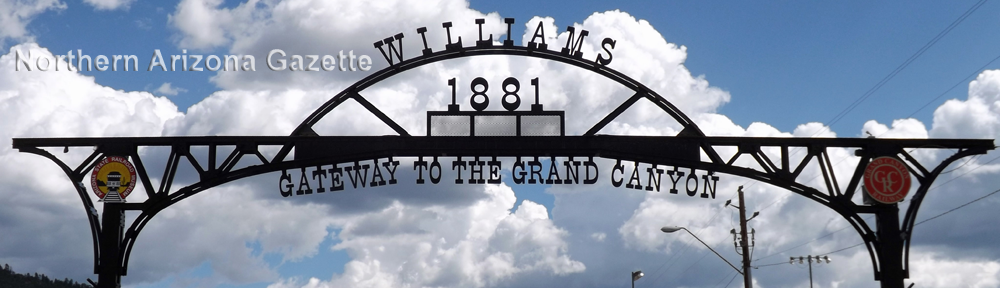
I-40 project east of Williams advances with 5 westbound miles rebuilt

WILLIAMS – An Interstate 40 paving project east of Williams continues to move forward with crews completing work to rebuild 5 westbound miles of the freeway between mileposts 167 and 172 and preparing for a traffic switch Thursday, July 12, that will move traffic back to the westbound lanes, according to the Arizona Department of Transportation.

Westbound I-40 traffic in this stretch has been using one eastbound lane, separated from eastbound traffic by temporary concrete barrier.

Also on Thursday, July 12, the westbound on- and off-ramps at Garland Prairie and Pittman Valley roads will reopen after being closed since May. In addition, the westbound on-ramp and eastbound off-ramp at Parks will close for a few weeks to allow crews to continue rebuilding a 1-mile section of I-40 in both directions near the interchange.

In a few weeks, crews will place concrete barrier on the westbound side of I-40 so both directions of traffic will use one lane in each direction while crews rebuild the eastbound lanes between mileposts 167 and 172. The eastbound on- and off-ramps at Garland Prairie and Pittman Valley roads will close for the next few months. The ramps at the Parks Road interchange at milepost 178 will reopen to help detour traffic.

Work on this 5-mile section of I-40 is anticipated to wrap up by the fall.

Meanwhile, crews continue to repave other portions of the highway between mileposts 162 and 179 from Cataract Lake to Parks. Crews will work until cooler temperatures arrive, then they will break for winter and return next spring to complete the work.

ADOT continues to improve pavement on other sections of I-40 and Interstate 17 in the Flagstaff area. Crews repaving northbound I-17 continue to progress toward Flagstaff making a smoother surface to drive on. Work at the I-17/I-40 interchange continues to move forward as falsework for bridge improvements has been put in place and the westbound I-40 bridge decks have been removed.

Work on the interchange is scheduled to be completed by the end of the year, while paving along I-17 will break for winter and finish next summer.

For more information on this project and others in the Flagstaff area, visit azdot.gov/projects (click on Northcentral District).

Schedules are subject to change based on weather and other unforeseen factors. For more information, please call the ADOT Project Information Line at 855.712.8530 or email Projects@azdot.gov. For real-time highway conditions statewide, visit ADOT’s Traveler Information Site at www.az511.gov, follow ADOT on Twitter (@ArizonaDOT) or call 511, except when driving.

Coconino County pilots Super Service Saturday

FLAGSTAFF — Coconino County initiated a pilot project to bring services to residents one Saturday a month during the summer. In a multi-departmental effort called “Super Service Saturdays,” the County will provide select services from 9 a.m. to 3 p.m. on the second Saturday of the month (July 14, August 11 and Septeptember 8) at the County Health and Human Services Office, 2625 N. King St. Flagstaff.

During every Super Service Saturday, there will be a wide variety of services offered by the Public Health Services District, Community Services Department, the Career Center and other County departments.

“We’re very excited to be launch this new program that will expand services to Saturdays,” said Board of Supervisors Chairman Matt Ryan. “The Board of Supervisors fully supports trying this out and opening our doors on Saturdays to help ease the burden for people who can’t access services during normal business hours. We hope people take advantage during this pilot period and help us spread the word.”

Resources for job seekers, Financial Empowerment Workshops and WIC Services will be available every Super Service Saturday. People can also get a free backpack, while supplies last, when they get back-to-school immunizations or sports physicals during the July and August events. District 2 Supervisor Liz Archuleta’s office will also take part in Super Service Saturdays to help answer constituent questions and inform them on County updates.

“We live in a very rural and diverse county where accessing these crucial services, Monday through Friday, during working hours, isn’t always easy,” said Supervisor Archuleta. “I’m thrilled that this program will help people, who usually have to take vacation or sick time or take unpaid time off work during the week, get services they need. If we can make the lives of the people we serve just a little bit easier, this program will be a success.”

The 2017 Coconino County Community Need Assessment and focus groups conducted by the Health District found that accessing services during traditional hours was sometimes difficult due to transportation issues and work schedules. The Super Service Saturday program will be evaluated after the pilot is completed to determine if Super Service Saturdays are continued or expanded to include more locations, dates and services.

More information and a complete list of services can be found at http://www.coconino.az.gov/superservicesaturday or by calling 928-679-7120. Registration is required for some of the services. Regular fees apply.

Rescue of Injured Hiker at Lava River Cave

FLAGSTAFF — On July 9, 2018 at approximately 2:00 pm the Coconino County Sheriff’s Office, Coconino County Sheriff’s Search and Rescue, Guardian Medical Transport, and Ponderosa Fire District responded to an injured hiker in the Lava River Cave. The 44-year-old male hiker from Cordes Lakes, AZ suffered an ankle injury near the end of the cave and was unable to walk out on his own. Ponderosa Fire and Guardian Medical personnel hiked in to initiate patient care while Search and Rescue carried a litter and responded with additional personnel to transport the hiker out of the cave. Twenty-three rescue personnel from the three agencies were involved in the operation.

The terrain in the cave as well as the darkness made for a challenging rescue. After an approximately three-and-a-half-hour rescue operation, rescuers were able to get the hiker out at 5:52 pm. The hiker was transported to Flagstaff Medical Center for treatment of an ankle injury.

The Coconino County Sheriff’s Office would like to remind hikers planning a trip to the Lava River Cave to be prepared for the conditions inside the cave. In addition to total darkness, the ground is rocky and uneven. Temperatures range from 32 to 40 degrees Fahrenheit inside the cave even during the summer. It is recommended that hikers use a headlamp and helmet as well as wear appropriate hiking footwear when entering the cave.

Fire restrictions to be lifted Wednesday on Williams and Tusayan Ranger Districts

WILLIAMS – Due to significant and widespread precipitation south of the Grand Canyon, the Kaibab National Forest will lift all fire restrictions across the Williams and Tusayan Ranger Districts at 8 a.m. Wednesday as well as the area closure of the Bill Williams Mountain watershed. Due to different weather conditions, however, Stage II fire restrictions will remain in effect for the entire North Kaibab Ranger District, which is located north of the Grand Canyon.

As of Wednesday morning, there will be no fire restrictions in effect on the Williams and Tusayan Ranger Districts. The districts have received a substantial amount of rain over the last few days with more in the forecast. The area closure of the Bill Williams Mountain watershed will also be lifted, and visitors can once again camp, hike and drive in the popular recreation area.

“I want to express my appreciation to our local communities and visitors for their outstanding compliance with fire restrictions this year,” said Art Gonzales, fire staff officer for the Kaibab National Forest. “We had an incredibly low number of human-caused wildfire starts on the forest despite being in extreme fire danger and having one of the driest periods on record in many years. When members of the public abide by fire restrictions and closures, they greatly help us in protecting their public lands and adjacent communities from the threats posed by human-caused wildfires.”

The North Kaibab Ranger District has not yet received the amount of precipitation seen on the southern two districts of the Kaibab National Forest and will therefore remain in Stage II fire restrictions until rainfall amounts increase.

Under the Stage II fire restrictions that will remain in effect on the North Kaibab Ranger District, the following are prohibited:

Building, maintaining, attending or using a fire, campfire, charcoal, coal, or wood stove fire, including fires in developed campgrounds and improved sites.
Smoking, except within an enclosed vehicle or building.
Discharging a firearm except while engaged in a lawful hunt pursuant to state, federal, or tribal laws and regulations.
Operating chainsaws or any internal combustion engine between the hours of 9 a.m. and 8 p.m.
Welding or operating acetylene or other torches with an open flame.
Using an explosive. (It is always illegal to use any kind of explosives on National Forest lands.)

Exemptions to the Stage II fire restrictions that will remain in effect on the North Kaibab Ranger District include the following:

Using a device fueled solely by liquid petroleum or LPG fuels that can be turned on and off. Such devices can only be used in an area that is barren or cleared of all overhead and surrounding flammable materials within 3 feet of the device.
Operating generators with an approved spark arresting device within an enclosed vehicle or building or in an area that is barren or cleared of all overhead and surrounding flammable materials within 3 feet of the generator.
Operating motorized vehicles in compliance with applicable laws and regulations. Parking off any road must be in an area that is barren or cleared of all overhead and surrounding flammable materials within 3 feet of the vehicle.

Due to the lack of precipitation over last winter and the rapidly increasing fire danger, forest officials first implemented campfire and smoking restrictions, also known as Stage I fire restrictions, across the entire Williams and Tusayan Ranger Districts on April 27. Those were quickly increased to Stage II fire restrictions on May 4, with the closure of the Bill Williams Mountain watershed implemented on May 11. The Williams and Tusayan Ranger Districts have remained in Stage II fire restrictions with the Bill Williams Mountain area closure since that time.

The North Kaibab Ranger District first entered Stage I fire restrictions on May 18 and then increased to Stage II on June 8. Because of its location north of the Grand Canyon, the North Kaibab Ranger District frequently enters fire restrictions and then remains in them later than the rest of the Kaibab National Forest, as is the case this year.

Fire restrictions and area closures are implemented when necessary in order to protect human life, property and natural resources. The Forest Service uses fire restrictions and area closures in order to prevent unwanted, human-caused fires and to limit the exposure of visitors during periods of potentially dangerous fire conditions.

For more information about the Kaibab National Forest and any fire restrictions in effect, reference the following sources:

Website: www.fs.usda.gov/kaibab
Twitter: www.twitter.com/KaibabNF
Facebook: www.facebook.com/KaibabNF
Arizona Fire Restrictions: firerestrictions.us/az

Meeting to be held Thursday, July 12, in Sedona on SR 89A improvements

PHOENIX – The Arizona Department of Transportation will hold an informational meeting on Thursday, July 12, in Sedona about plans for safety, roadway and bridge improvements along 12 miles of State Route 89A between Sedona and Flagstaff.

The meeting will be from 6 to 8 p.m. Thursday, July 12, at the Sedona Public Library, 3250 White Bear Road. A formal presentation is scheduled for 6:30 p.m.

The four projects planned for this stretch of SR 89A beginning in 2019 will require traffic restrictions and are being coordinated to minimize impacts on those who live, work and recreate in the area. The work involves:

Rehabilitating the Pumphouse Wash bridge.
Rehabilitating pavement from the Sedona city limits north to Bear Howard Drive.
Reducing the potential for rock fall between mileposts 375 and 389.
Installing erosion control infrastructure.

More information on the projects is available at azdot.gov/SR89AImprovements.

Project team members will be at the meeting to explain the improvements and share information about proposed construction schedules and traffic plans. The public can ask questions, provide comments and speak directly with project team members.

Those unable to attend the meeting can ask questions and submit comments in these ways:

Toll-free ADOT bilingual project information line: 855.712.8530.
Email: SR89A@hdrinc.com.
Mail: SR 89A Projects c/o HDR, 101 N. First Ave., Ste. 1950, Phoenix, AZ 85003.

The deadline for comments is July 28.

I-17 system detects first wrong-way vehicle in travel lanes

PHOENIX ‒ The wrong-way detection and warning system being tested along 15 miles of Interstate 17 in Phoenix alerted officials early Thursday to a vehicle traveling southbound in the wrong direction between Loop 101 and Bell Road, according to the Arizona Department of Transportation and Arizona Department of Public Safety.

No crash resulted from the incident, which involved the first vehicle detected on I-17 travel lanes in Phoenix since the wrong-way system went into operation in January.

At 1:11 a.m., the system sounded an alert that a wrong-way vehicle was traveling southbound in the northbound lanes of I-17 at Union Hills Road. The vehicle exited shortly after, turned around and reentered I-17 going the right way in the northbound lanes. While traffic operators and DPS continued tracking the vehicle, state troopers alerted through the system stopped the driver and took him into custody on suspicion of DUI.

The $4 million system includes 90 thermal detection cameras positioned above exit ramps and the mainline of the freeway between the I-10 “Stack” interchange near downtown to the Loop 101 interchange in north Phoenix. It’s designed to provide immediate alerts to ADOT and DPS so traffic operators can quickly warn other drivers via overhead message boards and state troopers can respond faster than relying on 911 calls from other drivers.

A detection by this first-in the-nation system sets off a loud horn in ADOT’s Traffic Operations Center as a window appears on operators’ workstations showing video from the thermal camera and providing other data. Using a computerized decision support system, operators can immediately activate digital message boards in the area alerting drivers and instructing them to exit the freeway.

If the detection is at an off-ramp, an internally illuminated wrong-way sign with red flashing LEDs will activate. It’s positioned along the ramp to attract the attention of wrong-way drivers, most of whom are impaired, often severely.

As it studies results from the wrong-way system along with partner agencies, ADOT is planning to install it along Loop 202 South Mountain Freeway that’s scheduled to open in late 2019 and is looking at adding it to other freeways.

In addition to Thursday’s detection, the system has detected more than 20 vehicles entering I-17 off-ramps and frontage roads in the wrong direction. None of these other vehicles is believed to have entered I-17 travel lanes, with the majority of drivers turning around on exit ramps.

Technology like the I-17 thermal camera system cannot prevent all wrong-way crashes from happening. The primary goal is reducing the risk of serious crashes by alerting DPS and ADOT to wrong-way vehicles much faster than waiting for 911 calls from other motorists. Faster detection is a key to giving law enforcement officers an improved chance of responding to a wrong-way vehicle.

ADOT officers using K-9 units to combat illegal drugs, human smuggling

PHOENIX – To help reduce smuggling of drugs and people and in alignment with Governor Doug Ducey’s commitment to public safety, Arizona Department of Transportation officers at commercial ports of entry in eastern and western Arizona are using the agency’s first K-9 units.

Between December and May, the two K-9 units, based at the Interstate 10 Ehrenberg Port of Entry near California and the Interstate 40 Sanders Port of Entry near New Mexico, have helped officers seize in excess of 350 pounds of marijuana, 600 vials of hash oil and $90,000 in illicit bulk currency. They have inspected hundreds of vehicles and aided other law enforcement agencies on dozens of occasions.

“Protecting public safety is the No. 1 responsibility of state government,” Governor Ducey said. “We’re committed to making sure law enforcement agencies, including the highly trained officers keeping watch at our commercial ports of entry, have the resources they need to combat drug trafficking and human smuggling.”

The units are part of ADOT’s Enforcement and Compliance Division, which enforces laws involving commercial vehicle safety and permits, registration and driver’s license fraud, and unlicensed auto dealers, among other areas.

While conducting safety inspections of commercial vehicles, ADOT officers occasionally discover apparent criminal activity that includes smuggling of drugs, cash, weapons and people. At the I-40 Topock Port of Entry alone, ADOT officers have seized 686 pounds of marijuana, 21 pounds of methamphetamine and 53 pounds of cocaine since 2014.

“This is a matter of highway safety,” ADOT Director John Halikowski said. “Our officers, along with the Arizona Department of Public Safety and local law enforcement agencies, find illegal drugs and cases of human smuggling on our highways. Adding K-9s where we are already screening commercial vehicles makes us a more capable and effective team.”

The K-9s, both of the Belgian Malinois breed, are trained to detect illegal drugs and human cargo. From their bases in Ehrenberg and Sanders, the units work at interstate ports of entry along the California and New Mexico state lines.

The pilot program to obtain and train both K-9s cost $29,000.

Officers with ADOT’s Enforcement and Compliance Division also investigate fraud involving driver licenses and vehicle titles and assist other law enforcement agencies when requested.