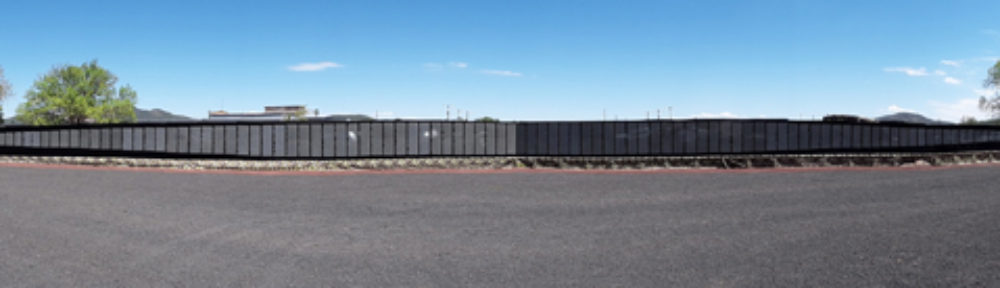
Volunteers needed for Table Mesa Recreation Area cleanup

Tread_Lightly__-_Image_1PHOENIX — “Tread Lightly!,” which promotes responsible recreation through stewardship, communication and education, has scheduled a cleanup Sunday at the popular Table Mesa Recreation Area north of Phoenix.

Partner organizations include the Arizona Game and Fish Department, the Bureau of Land Management, and the U.S. Forest Service.

Volunteers – including recreational shooters, off-highway vehicle (OHV) enthusiasts, hikers and others who champion responsible recreation – are needed for the four-hour event, which begins at 8 a.m. Volunteers are encouraged to bring water, work gloves, hat, sunscreen, trash pinchers and buckets. Long pants and sturdy shoes are recommended.

Sign up at https://treadlightly.wufoo.com/forms/z1sc8qkl0o4q2oj/. For more information, contact Dianne Olson at (800) 966-9900, Ext. 13, or e-mail: Dianne@treadlightly.org.

Table Mesa Recreation Area is located at Interstate 17 and Table Mesa Road. Proceed west on Table Mesa Road, then north on the frontage road. Follow signs posted at the end of the pavement. Volunteers will be on-site to provide more information and directions. To view a map, visit http://tinyurl.com/jyj6kby.

Specialty plates raise millions supporting Arizona charities

300_118762_USMC platePHOENIX — With only a few exceptions, specialty license plates offered by the Arizona Department of Transportation’s Motor Vehicle Division do more than just allow drivers to show support for causes and express their individuality. They raise money – and a lot of it – for charities and nonprofit groups.

In 2015, the 389,536 specialty plates on Arizona vehicles raised more than $6.5 million.

“We’re pleased to be a facilitator for people to give to their favorite charity,” Motor Vehicle Division Director Eric Jorgensen said. “The specialty license plate program is a great way to personalize your vehicle and support great causes.”

Drivers pay $25 a year for specialty plates. Of that amount, $17 goes to a designated charity or nonprofit group.

The top specialty plate for 2015 features the Arizona Cardinals, raising $1,087,677 for Cardinals Charities and its many beneficiaries. Next were two plates benefiting the Arizona Veterans’ Donation Fund that supports veterans and their families: Veterans, raising $1,051,093, and Freedom/Military Support, raising $521,424.

“Seeing so many vehicles on the road displaying their Cardinals plates is fantastic, and the display of support is incredibly gratifying,” Cardinals President Michael Bidwill said. “But even more meaningful is knowing the type of impact that the project is having on Cardinals Charities and, in turn, so many worthy causes throughout the state.”

There are 60 specialty license plates available in Arizona. Among the few plates that aren’t connected to a charity or nonprofit group are those for historic and classic vehicles, as well as plates that support a public service like amateur radio operators.

Specialty license plates are created by state law. In 2015, laws led to specialty plates featuring the Arizona Coyotes, U.S. Marine Corps, Midwestern University and Firefighter Safety Training.

Once a plate becomes law, the nonprofit organization benefiting from it must pay $32,000 to cover MVD’s programming and production costs and work with MVD to design the plate. Upon approval by the organization, ADOT and law enforcement, the plate goes into production for vehicle owners to purchase.

Nightime restrictions on Milton Road (SR 89A) for overhead sign work next week

FLAGSTAFF — The Arizona Department of Transportation crews will continue installation work on new overhead electronic message signs on Milton Road (SR 89A), between University Drive and Forest Meadows and on I-40 Westbound at MP 197 near Butler Avenue in Flagstaff.

Tuesday through Wednesday, southbound travel on Milton (SR 89A) (between University Dr and Forest Meadows) will be restricted to one lane to accommodate crews working on the west side of the roadway. Work will take place during evening hours from 8 p.m. to 6 a.m.

Thursday (March 10), travel on I-40 Westbound (near Butler Avenue) will have short temporary closures to accommodate installation of the overhead message sign; work will take place from 10 p.m. to 4. a.m.

Please observe reduced speeds and exercise caution while traveling through the work zone.

Electronic message signs span the width of the freeway and are used by ADOT to help keep drivers informed of traffic, road and weather conditions.

Reminder: Wildlife assets to be sold at AZGFD’s Outdoor Expo

Assets_-_2PHOENIX — The Arizona Game and Fish Department’s annual sale of wildlife assets will take place April 2-3 at the 2016 Outdoor Expo at the Ben Avery Shooting Facility, a change in venue from the International Sportsmen’s Expo (ISE) set for March 10-13 at WestWorld of Scottsdale.  

The Wildlife Assets Program enables the public to legally purchase antlers, head mounts, hides and other wildlife parts that have been seized during law enforcement investigations, obtained from animals killed in vehicle collisions or acquired through donations.

All assets will be sold through a silent auction. Proceeds will be used to support the department’s law enforcement program through the purchase of equipment (evidence collection kits, digital cameras, audio recorders, metal detectors, decoys and night vision equipment) and specialized training (interview and interrogation classes, wildlife forensic classes, crime scene investigation training) that assist officers in more effectively performing their duties.  

For more information, visit www.azgfd.gov/assets, or call (623) 236-7303.

ADOT launches Interstate 11 environmental study from Nogales to Wickenburg

imagesPHOENIX — The next phase of defining an Interstate 11 corridor through Arizona offers the public a chance to help shape the vision for a route intended to enhance trade and boost Arizona’s economy.

In partnership with the Federal Highway Administration and regional planning agencies, the Arizona Department of Transportation has launched a three-year environmental study to select an I-11 corridor alternative between Nogales and Wickenburg.

Extending from Nogales through the Las Vegas area to northern Nevada – and possibly north toward Canada ­– Interstate 11 would support large-scale manufacturing, enhance movement of people and freight by vehicle and potentially rail, and be a corridor for trade, communications and technology.

A three-year environmental study will consider possible routes between Nogales and Wickenburg. The first step is developing an Alternatives Selection Report assessing a wide range of corridor alternatives and options, along with opportunities and constraints. A Draft Tier 1 Environmental Impact Statement will evaluate in greater detail a smaller number of corridor alternatives, including segments that may advance as independent projects. There will be a no-build alterative as well.

Input from the public, communities and other stakeholders will contribute to these two reports, as well as a Final Tier 1 Environmental Impact Statement that will list a selected corridor alternative.

“The Arizona Department of Transportation and our partner agencies and stakeholders have long recognized the importance of the Interstate 11 corridor and the benefits that it will bring to our state through trade, commerce, job growth and economic vitality,” ADOT Director John Halikowski said. “This congressionally designated high-priority corridor offers the opportunity for Arizona to stay competitive, create regional and global connections, and provide a direct link to success in the global marketplace.”

In November 2014, the Arizona and Nevada departments of transportation completed a two-year feasibility study as the first step in the Interstate 11 process. ADOT focused on and supported a route through Arizona connecting Nogales and the Hoover Dam bypass bridge near Las Vegas.

In December 2015, Congress approved the Fixing America’s Surface Transportation Act, five-year legislation to improve the nation’s surface transportation infrastructure. While the FAST Act formally designates Interstate 11 from north to south in Arizona, it does not include funding. It does, however, make the corridor eligible for federal funding in the future.

The recommended I-11 corridor would likely follow US 93 from the Hoover Dam bypass bridge south to Wickenburg. The 280-mile corridor study area for the current environmental study begins in Wickenburg and runs west of the Phoenix metropolitan area and then south to the Tucson area and then Nogales.

During the next three years, the public, communities and other stakeholders will have opportunities to comment through regular meetings, community events and other forums. Right now, comments can be sent to:

Email: I-11ADOTStudy@hdrinc.com
Toll-free bilingual telephone hotline: 1-844-544-8049
Mail:

Interstate 11 Tier 1 EIS Study Team
c/o ADOT Communications
1655 W. Jackson St., Mail Drop 126F
Phoenix, AZ 85007

For more information about the I-11 study, visit i11study.com/Arizona

Spring breakers: Slow your roll on the roads, make Mom proud

PHOENIX — Over the next few weeks, thousands will take to Arizona’s highways for spring break getaways. Classmates, friends, fraternity brothers, 20-somethings looking to get away from the grind will drive to destinations that are sunny or snowy, relaxing or adventurous, luxurious or frugal and everywhere in between.

At the Arizona Department of Transportation, we want spring breakers to enjoy their escapes. More importantly, we want them to make it home safely. But there’s reason to worry that too many will not.

From 2012 to 2014, March was the deadliest month on Arizona roads with a total of 213 fatal crashes, according to ADOT’s Arizona Motor Vehicle Crash Facts Report, which includes crash information from state highways and local roads. Data from 2015 hasn’t been finalized.

That’s why many of our overhead message boards on highways are carrying the following safety messages for spring breakers and for drivers and passengers of all ages. They’ll be up from Friday afternoons through Sunday evenings:

SPRING BREAKERS:
SLOW YOUR ROLL
ARRIVE ALIVE

SPRING BREAKERS:
DOES MOM APPROVE
OF YOUR DRIVING?

Safe driving saves lives, and we all share the responsibility. Speeding, alcohol and failing to use seat belts are among the leading causes of traffic fatalities in Arizona. Each is preventable by choosing not to speed, to buckle up, to not drive drunk.

We hope everyone takes these messages to heart. We hope these messages prompt conversations about safe driving.

Arizona, Mexico sign agreement to further develop binational trade corridor

PHOENIX — Arizona and Mexico will further their collaboration on developing the key trade corridor connecting them under an agreement signed this week by Arizona Department of Transportation Director John Halikowski and Raul Murrieta Cummings, undersecretary of infrastructure for Mexico’s Ministry of Communications and Transport.

The memorandum of understanding, signed Tuesday in Mexico City, establishes a joint planning committee that will produce a study of ways to improve the corridor along Interstate 19 in Arizona and Highway 15 in Mexico. The primary north-south route in western Mexico and the western United States, the corridor feeds into Arizona’s port of entry system along with Arizona’s and Mexico’s highway systems.

The Arizona portion of the corridor will also serve as part of the anticipated route of Interstate 11, a multimodal transportation corridor from Nogales to the Hoover Dam bypass bridge. From there, I-11 will expand into northern Nevada, potentially reaching as far as Canada.

“Our efforts to strengthen the Arizona-Mexico relationship are already resulting in great success, including the signing of this agreement between ADOT and the Mexican federal Ministry of Communications and Transport,” Governor Doug Ducey said. “These efforts will grow our binational trade and make our freight and trade corridor one of the most competitive in the global market.”

Mexico is Arizona’s largest international trading partner, with $16 billion annually in imports and exports. By working together to invest in transportation infrastructure on both sides of the border, Arizona and Mexico will realize opportunities for connectivity, economic development and job growth.

“This is the culmination of years of building the right relationships and a continuation of Governor Ducey’s commitment to fostering a closer working relationship with Mexico,” Halikowski said. “Governor Ducey has challenged us to think big, to think as a business, and with this study we will push our sphere of influence beyond the border, helping Arizona companies tap into new business opportunities in Mexico. This will also help us position our corridor as a viable, cost-effective alternative to the corridors connecting Mexico to the Texas border.”

Mexico has pledged $100,000 and ADOT $200,000 toward the first phase of the multiyear Arizona-Mexico Corridor Study, which will identify priority transportation projects, solutions to congestion and backups along the Arizona-Mexico border, ideas to make the corridor more efficient for multimodal transportation, and technologies to improve efficiency and reliability. The study will also focus on identifying clusters for job creation and economic development along the entire corridor.

“This one-of-a-kind study will set us apart from the rest and help us market our region throughout the world,” Halikowski said.

ADOT is a member of the Transportation and Trade Corridor Alliance, which includes the Arizona-Mexico Commission, the Arizona Commerce Authority and the Arizona Office of Tourism, along with other partner agencies. The alliance focuses on creating economic development opportunities for Arizona and Mexico through investment in transportation infrastructure, partnerships and strategic planning.

“The Arizona-Mexico Corridor Study promises to bring greater understanding of the economic opportunities that exist for our region,” said David Farca, president of the Arizona-Mexico Commission. “In addition, it will help us raise awareness of Arizona’s strategic geographic position in the heart of an economically powerful mega-region that gives us a competitive advantage in the global market and makes Arizona a prime location to do business.”

Over the last few years, ADOT and the Federal Highway Administration, along with the U.S. General Services Administration and U.S. Customs and Border Protection, have invested more than $250 million in improvements at the Mariposa Port of Entry in Nogales ‒ improvements that benefit the overall corridor. Plans are moving forward to improve State Route 189 to enhance the flow of commercial truck traffic and to ensure international commerce can efficiently and safely travel between Arizona and Mexico.

During the meeting preceding the signing ceremony, Halikowski pushed for additional improvements to the Mexican side of Arizona’s ports of entry. Mexico’s Ministry of Communications and Transport reaffirmed its commitment of $2.2 billion for improvements to the Highway 15 corridor from Mexico City to the Arizona-Mexico border.

This week’s agreement promises to add not only needed infrastructure, but global opportunities.

“Arizona’s relationship with Mexico continues to grow and strengthen thanks to Governor Ducey’s efforts and ambitious trade agenda,” said Sandra Watson, president and CEO of the Arizona Commerce Authority. “In 2015 alone, Mexico accounted for more than $9 billion in Arizona exports. Conducting this study is an excellent step in enhancing the competitiveness of the Arizona-Mexico Corridor. Doing so will facilitate increased cross-border trade and advance Arizona’s position in the global economy.”

The Arizona-Mexico Corridor Study is expected to begin later this year. For more information about the Transportation and Trade Corridor Alliance, visit azttca.org.

Even $1 at tax time helps Arizona’s wildlife

az-game1Did you know that your state taxes do not support the conservation of Arizona’s wildlife, but your donations do? Taxpayers can help the state’s wildlife at tax time by “making a mark” on their state income tax form.

The Arizona Wildlife Fund is a voluntary program that allows Arizona taxpayers to make a donation specifically to help imperiled and endangered wildlife, including majestic bald eagles, black-footed ferrets, California condors, Apache trout, Mexican wolves and desert tortoises, among other non-game species.

“Since Game and Fish does not receive any general fund dollars, the Arizona Wildlife Fund provides important support for managing and conserving some of the state’s most iconic native species,” says Josh Avey, terrestrial wildlife branch chief for the Arizona Game and Fish Department. “The fund goes only to non-game species that are not hunted or fished, and the cumulative effect of even a dollar can have a tremendous impact on conserving one of Arizona’s greatest natural treasures – its wildlife.”

Since Arizona started the program more than 25 years ago, taxpayers have donated more than $5 million to the conservation of non-game wildlife.

For the 2014 tax year, the average donation was nearly $26. The Arizona Wildlife Fund box can be found on line “64” of the state’s long income tax form, or line “33” of the short tax form.

To learn more about the conservation and reintroduction efforts the fund supports, visit www.azgfd.gov/nongame.

Arizona Game and Fish, City of Tempe work together to keep Town Lake fish healthy

TTLpicWebTEMPE — The City of Tempe and Arizona Game and Fish Department have cooperated on a management plan to help fish in Tempe Town Lake during the final phase of construction of the new dam.

“Our natural environment is extremely important to Tempe. We are grateful to have the expertise of Arizona Game and Fish and our longtime water quality expert, Aquatic Consulting, as we undertake the final phase of our dam construction,” said Tempe Public Works Director Don Bessler. 

Arizona Game and Fish and the City of Tempe are working together to save as many fish as possible while the previous dam system is being removed. Tempe has to move the water out of Town Lake into an SRP canal system, leaving the lake without water for approximately three to five weeks.

The cooperative effort started several months ago and includes:

  • Not stocking fish as normal in fall 2015 in order to lower the number of fish that would need assistance.
  • Removing the limit on the number of fish that people could catch at Town Lake.
  • Moving a representative portion of some fish into protected areas of the lake that will retain water.
  • Using fish-friendly pumps that allow the fish to move into the SRP canal system along with the water.
  • Monitoring pockets of water within the lake that contain fish, since fish can survive in small space for such short amounts of time.


This planning has reduced the number of fish that need assistance. Several thousand people live and work around Tempe Town Lake and millions come to visit each year. It is the intent of both Arizona Game and Fish and the City of Tempe to minimize the impact of this project for these people.

“Some people have asked why we can’t move fish into other bodies of water, such as nearby Canyon Lake. We can’t do this because of the possible transfer of fish-related bacteria and diseases,” said Scott Gurtin, AZGFD Community Fishing Program manager. “This plan represents the best and safest way to conserve fish and keep our waters healthy.”

New fish will enter Town Lake when the lake is refilled. The water will come from the Central Arizona Project canal system, which has many varieties of fish. Insect-eating fish will also be stocked at that time. Arizona Game and Fish will restock Town Lake with other varieties at the appropriate times.

Town Lake is expected to be completely full and operational by approximately April 30. The new dam system is expected to last more than 50 years. Read more.

Game and Fish Commission to meet March 4 in Sierra Vista

Sierra Vista — The next meeting of the Arizona Game and Fish Commission will be March 4 at the Sierra Vista City Hall Council Chambers at 1011 N. Coronado Dr. in Sierra Vista. The meeting begins at 8 a.m.

The public is invited to attend the meeting in person, view it live via video stream at any Game and Fish regional office (Friday only), or view it over the web at www.azgfd.gov/commissioncam. Members of the public who wish to speak to the Commission may submit Speaker Cards (Blue Cards) in person at the meeting or from any regional Game and Fish office. The ability to speak to the Commission is not available for those viewing the webcast online.
 
Items on the agenda include:

  • An update on a potential reduced fishing license fees promotion as a means of marketing Arizona fishing and expanding the department’s customer base.
  • A briefing on current state and federal legislation related to the department’s mission.
  • A request to make Patterson Ponds in St. Johns a community fishing water.
  • A presentation on the department’s borderlands and international wildlife conservation efforts.
  • Several requests to reinstate bonus points.
  • Appointment of commissioners to standing committees.
  • Hearings on license revocations for violations of Game and Fish codes, and civil assessments for the illegal taking and/or possession of wildlife (time certain at 2 p.m.).

On Saturday, the commission will take a field trip to view one of Arizona’s premier state parks, Kartchner Caverns State Park.

To view a copy of the full meeting agenda, visit www.azgfd.gov/commission and click on the “commission notice/agenda” link.

The Arizona Game and Fish Commission is the policy-setting board overseeing the Arizona Game and Fish Department. It is composed of five members (serving staggered five-year terms) appointed by the Governor and confirmed by the Senate. No more than one commissioner may be from any one county. No more than three may be from the same political party. Since its inception in 1929, this organizational structure has served as a buffer for the best interests of science-driven wildlife conservation during eight decades of back-and-forth political change.

For more information on the commission, visit www.azgfd.gov/commission.