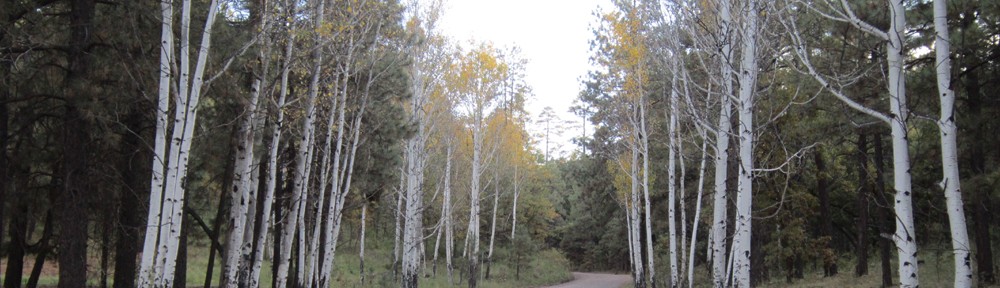
Northeast flank of Stina: Highest priority for suppression efforts

FREDONIA — Fire managers are focusing on securing the northeast portion of the 1,289 acre Stina Fire as their top priority and began that with a small burn out operation today.

“We will continue to look for opportunities to secure the northeast flank, utilizing firing (burn out) opportunities when we can,” said Incident Commander Trainee Dave Veater.

The southeast portion of the fire is a lower priority than the northeast flank because this area has the Tipover Prescribed Fire from last fall directly in front Stina’s path providing a catcher’s mitt where fuels have been reduced. Elsewhere on the fire, firefighters completed hose lays and continued improving containment lines by removing vegetation. Also, two engines from the fire were utilized to suppress new lightning fires that were detected today on the North Kaibab Ranger District.

There are two 20-person hotshot crews and one 20-person Type-two hand crew, Seven fire engines and other totalling about 102 people on this fire. The fire fuel consists of Ponderosa pine, aspen and mixed conifer.

The Stina Fire is 23-miles southwest of Jacob Lake and about 2-miles east of Fire Point on the North Kaibab Ranger District of the Kaibab National Forest.

Central West Zone Type 3 Team, continues to manage the 2,500-acre Cat Fire with full suppression tactics with a total of 88 personnel including two hotshot crews and nine engines. Fire management decisions are determined with consideration of firefighter safety, location of the fire, available resources, regional and national preparedness levels, and weather forecast.

Maintaining the integrity of cultural and natural resources within the Saddle Mountain Wilderness is a key management objective. “While we are concerned about these valuable resources, our most important resource is people,” said Incident Commander Rob Williams.

Typically, there has been an increase in fire behavior during the warm afternoon hours. Due to cooler temperatures and higher moisture, activity was minimal with a small flare up that put up visible smoke for a short time in the afternoon. Crews are continuing to improve indirect line around the fire and clean up fuel breaks along Forest Road (FR) 219, as well FR 610 in order to tie into the Fuller Fire scar. Two local engines from the Cat fire were utilized to suppress two new lightning starts that were detected this afternoon on the North Kaibab Ranger District.

Fire management resources have closed all roads within the planning area boundary, which includes FR 213 and 220 on the north, FR 610 on the east and south, and House Rock Valley Road 8910 on the east.

The following trails are closed: Arizona Trail from FR 213 to FR 610, North Canyon Trail, South Canyon Trail, Saddle Mountain Trail, and Pt. Imperial and Nankoweap Trails, which are both located on Kaibab National Forest and Grand Canyon National Park land. The closure will remain in effect until it is considered safe to enter the area. Roads 213, 219, 220 south of 213, 610 (Marbleview, South Canyon), 611 (East Rim), and 8910 south of 220 are also closed.

Smoke is visible on both the North and South Rims of the Grand Canyon park, and there is a regional haze present in surrounding communities from multiple wildfires in the West. Individuals sensitive to smoke can learn how to help protect their health by visiting the Coconino County Public Health Services District website at: http://bit.ly/SmokeHealthAwareness.

Arizona Game and Fish Commission recognizes Kaibab National Forest for partnering to sustain wildlife waters

Michael Sedgeman and Travis Largent (both on right) accepted the Arizona Game and Fish Commission award on behalf of the Kaibab National Forest earlier this month. – Kaibab Forest photo

WILLIAMS – Earlier this month, the Arizona Game and Fish Commission recognized the Kaibab National Forest for partnering to sustain wildlife waters during recent drought conditions.

Specifically, the Kaibab National Forest was presented with a Commission Commendation of Achievement “for the continued partnership, stewardship, and unwavering commitment to wildlife conservation.” The recognition resulted from the two agencies teaming together during the exceptionally dry spring and early summer months to provide viable water sources for wildlife in Game Management Units 9 and 7W, which generally fall within the Kaibab National Forest’s Tusayan and Williams Ranger Districts.

“Due to the heightened fire danger and the additional fire resources we had available, we had the opportunity to provide some extra support to the Arizona Game and Fish Department,” said Jeremy Human, fire management officer for the Tusayan and Williams Ranger Districts. “Arizona’s wildlife is an important resource. A lot of what we do as an agency [Forest Service] is tied closely to the department’s wildlife management work, so this was an opportunity for us to be a good neighbor and do the right thing. We were able to accomplish meaningful work that made a difference when we weren’t actively engaged with responding to wildfires.”

Kaibab National Forest employees used large tenders to haul and deliver water to catchments that were identified as critical by Arizona Game and Fish Department wildlife managers. All told, more than 50,000 gallons of water were made available at priority locations across the forest, and hundreds of hours of equipment and personnel time were donated.

“We have a strong and ongoing partnership with the Arizona Game and Fish Department, and this was another example of how we can work together to improve outcomes for wildlife and support the missions of each agency,” said Travis Largent, wildlife biologist with the Kaibab National Forest. “We hope to continue our mutual efforts to achieve shared goals such as improving forest health and enhancing wildlife habitat.”

Water was a particularly scarce resource earlier this year due to the ongoing drought in Arizona and the extreme lack of winter precipitation. In fact, the Tusayan and Williams Ranger Districts had the driest October to June period on record in the past 25 years, creating potentially deadly conditions for area wildlife.

Across the state, the Arizona Game and Fish Department monitors and maintains thousands of water catchments in strategic locations. Due to the importance of these waters to diverse wildlife species and the exceptionally dry conditions prevailing in northern Arizona, the department faced the monumental task of trying to refill catchments that were quickly drying out statewide.

“They stepped in at a time when what we had in place wouldn’t have been able to cover the need,” said Nate Ragan, wildlife manager for the Arizona Game and Fish Department’s Game Management Unit 9. “They helped us when we needed it the most and got water to a lot of places that would have gone dry without them. It was a breath of fresh air to have that resource made available to us and to get the help when we most needed it.”

In addition to the Kaibab National Forest, many other partner and volunteer organizations also donated time and resources to the important work of sustaining these wildlife waters.

2018-19 dove, band-tailed pigeon regulations available online

PHOENIX — The Arizona Game and Fish Department has posted the 2018-19 Arizona Dove and Band-tailed Pigeon Regulations online at http://www.azgfd.com/Hunting/Regulations.

The regulations have been produced in a format that hunters will find particularly handy in the field. The color brochure is easier to read and features important hunting information, such as season dates, daily bag and possession limits, and legal requirements, at a glance.

Hunters 18 and older must possess a valid Arizona hunting license, as well as a migratory bird stamp for the 2018-19 season — both of which can be purchased online now at https://license.azgfd.gov/home.xhtml.

For everything else “dove,” visit www.azgfd.gov/dove.

Dove hunters play an important role in conservation. Wildlife and Sport Fish Restoration Program (WSFR) (SEE PDF) funds are comprised of excise taxes collected on the sale of hunting and fishing equipment (including 11 percent on ammunition), the benefit of which comes right back to Arizona for habitat improvements, shooting ranges, boating access and more.

Buy a combo hunt and fish license – and enjoy the “Best of Both Worlds”

Don’t just buy a hunting or a fishing license. Go online today and purchase a combo hunt and fish license that will be valid for the next 365 days — and for only $20 more (for state residents) than the price of an individual hunting or fishing license.

Fish are biting, doves are coming, so don’t miss out. It’s time to enjoy the “Best of Both Worlds.” Buy your combo hunt and fish license today. Visit https://www.azgfd.com/bestofbothworlds/.

Webcast on dedicated funding source for outreach, education and public awareness now available online

PHOENIX — The Arizona Game and Fish Department is seeking public input on ways to establish and maintain a discretionary, dedicated funding source for outreach, education and public awareness efforts.

A webcast can be viewed at https://youtu.be/pWzMi2o8sEE. All ideas can be submitted by email through Sept. 8 at: ideas@azgfd.gov. Note: Only ideas related to the topic of establishing a funding source will be considered.

Draft alternatives, based on this public input, vetting and benchmarking, will be presented to the Arizona Game and Fish Commission during its public meeting September 21 at the Navajo County Heber Complex, 2188 W. Country Club Drive, in Overgaard.

For more information, including frequently asked questions (FAQs), visit https://www.azgfd.com/agency/dedicated-funding-source/.

Critical Incident Response Training to be held in Downtown Flagstaff

FLAGSTAFF – On August 14 and 15, 2018 the Coconino County Sheriff’s Office will be hosting a Critical Incident Response Training that involves personnel from several Northern Arizona law enforcement agencies as well as personnel from local area fire departments.

We want our residents, business owners, and visitors to be aware that this training will result in increased police and fire activity in the area. The training will occur between 8 am and 5 pm on August 14-15 at the former San Francisco de Asis School, located at 320 N. Humphreys St. Flagstaff AZ, 86001.

The training will be a reality-based exercise to provide first responders additional tools to use when faced with an integrated response to critical incidents.

The Sheriff’s Office along with the other agencies would like to thank St. Francis De Asis Parish for providing the venue for this training.

Cat Fire Burns Aggressively Downslope to the East

FREDONIA — Active fire behavior was seen on the Cat Fire today, resulting in the consumption of an estimated 800 acres. Fire spread mainly downslope to the east and south predominately in ponderosa and pinyon-juniper fuel types.

Overview
Date reported: August 6, 2018
Size: 2,118 acres
Location: The Cat Fire is about 25 miles southeast of Jacob Lake in the Saddle Mountain Wilderness on the North Kaibab Ranger District of the Kaibab National Forest.
Fuel: Mixed conifer, ponderosa pine, and pinyon-juniper.
Weather: Forecasters anticipate a slight increase in moisture across the fire area.
Strategy: Full suppression
Situational update: Crews continued to focus control actions on the western side of the fire today as it moved closer to Forest Road 219, and very little growth occurred on the western flank. Management of the Cat Fire will transition to the Central West Zone Type 3 team under the command of Rob Williams on Sunday, August 12, 2018 at 6 a.m.

Closures: Fire management resources have closed all roads within the planning area boundary, which includes Forest Roads (FR) 213 and 220 on the north, FR 610 on the east and south, and House Rock Valley Road 8910 on the east.

The following trails are closed: Arizona Trail from FR 213 to FR 610, North Canyon Trail, South Canyon Trail and Pt. Imperial and Nankoweap Trails, which are both located on Kaibab National Forest and Grand Canyon National Park land. The closure will remain in effect until it is considered safe to enter the area.

Smoke: Smoke is visible on both the North and South Rims of the park, and there is a regional haze present in surrounding communities from multiple wildfires in the West. Individuals sensitive to smoke can learn how to help protect their health by visiting the Coconino County Public Health Services District website at: http://bit.ly/SmokeHealthAwareness.

For fire information on the Kaibab National Forest, visit www.fs.usda.gov/kaibab and Inciweb under the name of the fire at https://inciweb.nwcg.gov or visit us on Facebook and Twitter @KaibabNF or call (928) 635-8311 for recorded fire information.

A Good Day on the Stina Fire

FREDONIA — Incident Commander Trainee Dave Veater said, “It was a good day on the Stina Fire.” Fire crews were able to make good progress on the east and north flanks of the fire today; preparing lines for burning operations on the north side, placing a hose lay in on the east side of the fire, and assessing the suppression options for the south flank of the fire. The west side of the fire was very active in the mixed conifer, but there was not any significant fire growth today.

Resources:
4 20-person hotshot crews and 1 20 person type two hand crew
9 fire engines
1 bulldozer
Miscellaneous overhead (a total of 156 personnel)

Stina Fire Overview
Start date: July 26, 2018
Size: 1,200 acres

Location: The Stina Fire is 23 miles southwest of Jacob Lake and about 2 miles east of Fire Point on the North Kaibab Ranger District of the Kaibab National Forest.

Fuel: Ponderosa pine, aspen and mixed conifer.

Weather: Forecasters anticipate a chance of thunderstorms across the fire area.

Strategy: Full suppression

Public invited to release of endangered California Condors

VERMILION CLIFFS – There is nothing quite as iconic in the western United States as a California Condor soaring over the red-rock-canyon landscapes of northern Arizona and southern Utah. Thanks to people working together to recover this species, condors have become a fixture in southwestern skies. On National Public Lands day this year, the public is invited to join the recovery effort by witnessing first-hand a spectacular release into the wild of several captive-bred young condors.

California Condors will be released by The Peregrine Fund atop the spectacular cliffs in Vermilion Cliffs National Monument in northern Arizona at 11 a.m. Saturday, September 22. The public is welcome to observe the release from a viewing area where spotting scopes provided by partners and Swarovski Optik will be set up and project personnel will be available to answer questions.

The release coincides with National Public Lands Day, the nation’s largest hands-on volunteer effort to improve and enhance America’s public lands. National Public Lands Day involves the U.S. Bureau of Land Management and other federal agencies, along with state and local governments and private groups.

This will be the 23rd annual public release of condors in Arizona since the southwest condor recovery program began in 1996. Condors are produced at The Peregrine Fund’s World Center for Birds of Prey in Boise, Idaho, the Oregon Zoo, Los Angeles Zoo, and San Diego Zoo Safari Park and then transported to release sites annually for release to the wild.

The historical California Condor population declined to just 22 individuals in the 1980s when the greater California Condor Recovery Program was initiated to save the species from extinction. As of July 25, 2018 there were 85 condors in the wild in the rugged canyon country of northern Arizona and southern Utah and the total world population of endangered California Condors numbers nearly 500 individuals, with more than half flying in the wilds of Arizona, Utah, California, and Mexico.

The Arizona-Utah recovery effort is a cooperative program by federal, state, and private partners, including The Peregrine Fund, Arizona Game and Fish Department, U.S. Fish and Wildlife Service, the Bureau of Land Management’s Vermilion Cliffs National Monument, Grand Canyon and Zion national parks, Utah Division of Wildlife Resources, and Kaibab and Dixie national forests among many other supporting groups and individuals.

For more information about California Condors in Arizona visit http://www.peregrinefund.org/condor.

I-17 traffic restrictions south of Flagstaff through early November

Drivers on Interstate 17 in northern Arizona are advised to plan for travel delays because of traffic realignment and ramp closures at Willard Springs Road, 17 miles south of Flagstaff near Munds Park. Crews are replacing the Willard Springs Road bridges on I-17 and will close access under the highway.

Drivers should prepare for delays while the following detours are in place:

  • Northbound I-17 drivers heading to Willard Springs Road will be detoured to Newman Park Road to exit and re-enter southbound I-17.
  • Drivers exiting Willard Springs Road toward northbound I-17 will be detoured southbound I-17 to Pinewood Road in Munds Park to exit and re-enter northbound I-17.

Drivers in both directions of I-17 will be re-routed around the bridge construction at Willard Springs Road onto the on- and off-ramps at reduced speeds.

For more information, email MKirby@azdot.gov or call Mackenzie Kirby, Community Relations project manager, ADOT Northcentral District, at 928.525.6494. Information is also available on the project web page.

Schedules are subject to change because of weather and other unforeseen situations. For more information, please call the ADOT Project Information Line at 855.712.8530 or email Projects@azdot.gov. For real-time highway conditions statewide, visit ADOT’s Traveler Information Site at www.az511.gov, follow ADOT on Twitter (@ArizonaDOT) or call 511, except when driving.

Schedules are subject to change based on weather and other unforeseen factors. For more information, please call the ADOT Project Information Line at 855.712.8530 or email Projects@azdot.gov. For real-time highway conditions statewide, visit ADOT’s Traveler Information Site at www.az511.gov, follow ADOT on Twitter (@ArizonaDOT) or call 511, except when driving.

Low-cost Rabies Vaccination Clinic

FLAGSTAFF- The Coconino County Public Health Services District (CCPHSD) is sponsoring a low-cost Rabies Vaccination Clinic from 1 to 4 p.m. on Saturday, August 11 at the Coconino Humane Association, 3501 E. Butler Avenue, Flagstaff.

Rabies vaccinations will be $10 for dogs and cats. The Kaibab Veterinary Clinic will provide services as well as other vaccinations. Fees will vary and only cash or check will be accepted.

CCPHSD Animal Management will also be offering a one-year license for dogs for $12 altered and $25 unaltered. CCPHSD Animal Management also offers 2 and 3-year license options. Spay/neuter vouchers ($30 value) will also be available for canine owners current with rabies vaccinations and licensing.

Arizona State law requires all dogs to be properly vaccinated and licensed. The CCPHSD strongly recommends that cats be vaccinated against rabies.

Rabies is an infectious disease that affects the nervous system, including the brain and spinal cord of animals and humans. It is caused by a virus present in the saliva of infected animals and is transmitted to humans through contact with the live virus.

For more information, call the CCPHSD Animal Management Program at 928-679-8756 or visit www.coconino.az.gov/health.