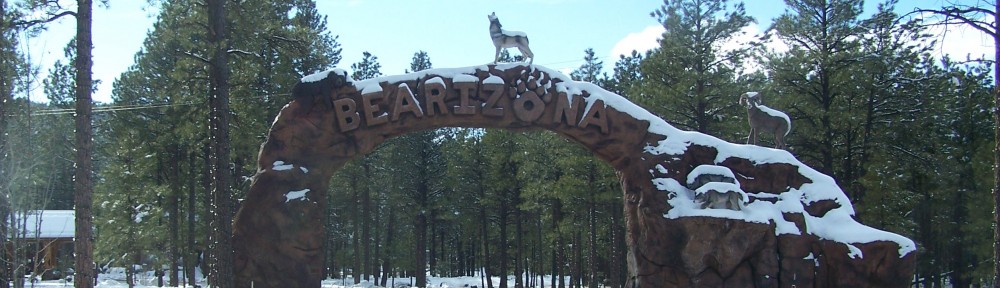
 The Gila Watershed Partnership, a non-profit Arizona corporation, seeks an experienced Executive Director. The ED serves as the chief executive for the organization, and provides leadership and direction to the staff. The ED reports to the GWP Board of Directors, and is responsible for assisting and implementing the organization’s strategic plan. The goals of GWP are to help conserve and enhance the natural resources and the environment of the watershed for all users, to help increase and improve water quantity and quality and to help plan and act to avoid and minimize damage from large storms, floods, and other natural disasters.
Continue reading
Tag Archives: Phoenix
Happy 25th birthday, Deck Park Tunnel!
PHOENIX – Twenty-five, years ago, the last segment of Interstate 10 was completed and it happened in Phoenix.
When the Arizona Department of Transportation opened the “Final Mile” between Third Avenue and Third Street, including the Deck Park Tunnel, it created the nation’s second coast-to-coast interstate, stretching 2,460 miles and across eight states, from Santa Monica, Calif., to Jacksonville, Fla.
“This opening of I-10 is truly a milestone in transportation history,” Thomas Lane, head of the Federal Highway Administration, said at the tunnel’s dedication ceremony on Aug. 10, 1990. “Today, we mark the completion of a major transcontinental route.”
Fast-forward to 2015, on Monday, Aug. 10, when ADOT observes the Deck Park Tunnel’s 25th birthday.
While the opening of the Deck Park Tunnel marked the completion of I-10 as a transcontinental interstate, it also signaled the beginning of the Phoenix-metro area’s modern freeway system, which continues to grow today. Putting the age of the freeway network into perspective, “The Simpsons” has been on television longer than the Deck Park Tunnel has been open to traffic.
When the tunnel opened, construction of the Loop 101 and state routes 51 and 143 had just begun, and the Loop 202, Loop 303 and State Route 24 existed only on planning maps. Phoenix’s population boom made the expansion necessary. The 20th-largest city in the United States in 1970, Phoenix would rise to No. 6 by 2000, according to U.S. Census data. The completion of the Deck Park Tunnel connected the metropolitan area’s east and west valleys, allowing for quicker and more convenient travel across the metro area. The tunnel also emerged as a linchpin in Arizona’s economic development, supporting the efficient movement of goods and commerce into and through the state. Since it opened, an estimated two billion vehicles have passed through the tunnel’s tile-lined walls.
“The Deck Park Tunnel is more than simply a way to get through downtown Phoenix,” ADOT Director John Halikowski said. “It is part of an interstate Key Commerce Corridor that is integral to Arizona’s continued economic growth and development.”
Decades before it was built, transportation officials recognized the need for the Papago Freeway – the stretch of I-10 that passes through Phoenix. The first plans for the freeway were formalized in 1960. However, a tunnel wasn’t included in the original design.
The tunnel was a part of a solution to opposition that did not want the Papago Freeway built near the Phoenix city center, unsettling neighborhoods established before interstates existed. In 1969, plans called for an elevated freeway with wide, arcing “helicoil” ramps that were designed to minimize disruption of city streets and the utility grid. But a public vote to build the freeway was defeated in 1973. Two years later, the elevated freeway was scrapped in favor of a below-grade design, which included the tunnel, and Phoenix voters approved the measure. Engineers devised an innovative plan that set the freeway below street level for six blocks – from Third Avenue to Third Street. Above the freeway, 19 bridges would be lined up side by side, creating a tunnel effect for motorists, even though it does not meet the Federal Highway Administration definition of a tunnel. A 30-acre park would be built atop the bridge decks. That’s how it came to be known as the “Deck Park Tunnel,” though its official name is the Papago Freeway Tunnel.
Still, the Papago wasn’t yet a “go.” Freeway opponents put the issue on the ballot again in 1979, but citizens voted overwhelmingly in favor – 3-to-1 – of building the Papago Freeway and construction began in 1983. When it was finished in 1990, the Papago Freeway ranked as the most expensive highway project to date in Arizona at a cost of $500 million, plus $150 million for right-of-way purchases.
Not surprisingly, public interest in the freeway was high as the opening neared. According to a report in The Arizona Republic, more than 100,000 people attended a three-day “open house” at the Deck Park Tunnel, riding bikes and running footraces in yet-to-be-driven-on traffic lanes. At the dedication on Aug. 10, 1990, Federal Highway Administration official Thomas O. Willett addressed the obstacles overcome in the previous three decades to build the freeway.
“Completion of the Papago Freeway is far more than construction of concrete and steel,” Willett said. “It represents a successful culmination of a state, city and federal partnership forged by the challenge of a concerned public.”
Arizona Friends of NRA want to give you fifty guns
Updated July 31, 4:28 p.m.
 PHOENIX — The Arizona Friends of the NRA have announce a fifty gun (or fifty-fifty) raffle. Tickets are $50 each in a winner take all raffle for fifty guns. If a minimum of 600 tickets are not sold, the raffle will turn into a fifty-fifty split of the amount taken in by the raffle.
I mean, are you not going to sell 600 tickets for a possibility of fifty guns in the number 1 gun friendly State in the union two-years running?
But you don’t have to be in Arizona in order to win. Anyone eligible to own guns in their State can purchase tickets online. Again you would have to be eligible to own the same weapons that you can own in Arizona. Before entering, you should check with a local FFL in your area.
The winner, of course, must be eligible to own guns in accordance with State and national law. The winner may also opt for a $4,999.00 payout and may have to fill out a 1099 tax form. The winner is also responsible for all fees for the transfer of the weapons, such as the background check. If the winner is found ineligible to own firearms, they will be required to take the cash payout.
The drawing is to be held at Bear Arms in Scottsdale on October 25. Bear Arms is an FFL dealer working with the Friends of the NRA on this promotion. They are located at 10321 N. Scottsdale Road. Bear Arms is the largest family-owned firearms store in the Great State of Arizona. The hold CCW classes, have a good assortment of knives and even deal in Class III weapons.
You can contact Winston Pendleton for questions or to purchase tickets. Phone 602-565-8916 or you can purchase tickets online. Bear Arms can be reached at 480-998-2727.
Blasting closure scheduled on US 60 between Superior and Miami for mid-August
The first closure for blasting on the Oak Flat passing lane project on US 60 (milepost 231-233) between Superior and Miami has been scheduled between Aug. 12 and Aug. 20. The exact date will be decided late next week when drilling crews have been able to finalize their progress.
Blasting will be done during a weekday and will start at 9 a.m. Motorists traveling on US 60 between Superior and Miami should plan on the highway being closed for up to 90 minutes. There will be a seven-day notice prior to the exact blasting date and that information will be distributed to the media, digital message boards around Superior and Globe/Miami, project web page updates, ADOT social media sites and contact emails.
Lane restrictions on northbound Interstate 17 this week for shoulder work
The Arizona Department of Transportation will perform routine maintenance on northbound Interstate 17 at Table Mesa Road on Tuesday and Wednesday, July 28 and 29 between 7 a.m. and 4 p.m.
Motorists should be prepared for a right lane restriction and intermittent shoulder closures between mileposts 236 and 237 to allow for a safe work zone for maintenance crews. Minimal delays are expected.
The speed limit through the work zones will be reduced to 45 mph during work hours.
ADOT enhances security of driver license application process
PHOENIX — The Arizona Department of Transportation is taking an active role in curbing identity theft and fraud by implementing facial recognition technology in the application process for state-issued credentials.
An applicant for a new or duplicate driver license or state ID card at an ADOT Motor Vehicle Division or Authorized Third Party office will have their photo taken at the beginning of the process. Facial recognition during the “Photo First” review process occurs seamlessly and without delay as the customer continues through the application process.
In 2012, ADOT Motor Vehicle Division implemented a Photo First approach to aid in the detection of and prevention of fraud, forgery and identity theft. In 2014, ADOT Motor Vehicle Division implemented Central Credential Issuance, eliminating credentials being issued at the MVD or Authorized Third Party offices. Both processes have contributed to a more comprehensive review of applications along with providing more time to identify possible fraudulent submissions.
One of the best screening formats in the detection of identity theft, attempted fraud or forgery in the application process has always been the ADOT Motor Vehicle Division customer service representatives who initially review all documents submitted in the application packet. During this initial screening process of the application packet by ADOT employees, possible file errors or fraudulent submissions are detected.
“Facial recognition technology supports the commitment by ADOT to protect the privacy of its customers, and to maintain the integrity and accuracy of the credential issuance process,” said ADOT Director John Halikowski. “This technology enables us to fight against fraud and identity theft.”
The technology provides an effective screening method to identify errors in customer records in the state driver license database and to prevent fraudulent attempts to obtain an Arizona driver license or identification card. It also allows ADOT to develop the new federally compliant Voluntary Travel ID according to the requirements outlined in the federal REAL ID Act of 2005.
When a credential application record generates an alert resulting from the facial recognition technology, the system will automatically perform an additional review of the record to identify and correct any possible file errors. If the system verifies it is not a file error, the record will then undergo a comprehensive review by personnel in the ADOT Office of the Inspector General.
“This technology allows us to take a proactive approach to protecting people’s identities and stopping fraud,” said ADOT Assistant Director Terry Conner, who leads the Enforcement and Compliance Division. “Our detectives are already working investigations after reviewing reliable information provided by the system.”
I-40 bridge overpass at Twin Arrow Road (exit 219) reduced to one lane at times beginning Monday morning (Jul. 20)
PHOENIX — Geotechnical work on the Interstate 40 overpass at the Twin Arrow Road traffic-interchange will begin on Monday (Jul. 20) and continue daily until Wednesday (Jul. 22). Please use caution while the following restrictions are in place:
- I-40 bridge overpass at Twin Arrows Road (exit 219), toward the Twin Arrows Casino, reduced to one lane at times daily from 7 a.m. to 4 p.m. Monday through Wednesday (Jul.20-22). Flaggers will be present during restrictions to guide traffic through the work zone.
Please allow extra travel time and to be prepared to merge safely when approaching the work zone.
A geotechnical investigation is designed to provide engineers with data on conditions below the surface, helping to refine construction plans and processes. The Twin Arrows TI project is scheduled to begin in 2016.
Requesting public records? ADOT simplifies, speeds up process with new online form
 PHOENIX — If you’re seeking public records from the Arizona Department of Transportation, you can now save time, paper and postage by making your inquiry online.
ADOT launched a new online public records request process this week that eliminates the need for paper forms. Now, filing a request is as simple as completing and submitting a form online, available at www.azdot.gov/media. Previously, those making a request often would need to wait to have a form sent by mail, then return the completed paperwork to ADOT.
The online system allows ADOT to begin researching and completing requests faster.
“Our new public records online request form streamlines the way ADOT does business and creates a more efficient process for the public to access information,” said ADOT Director John Halikowski. “This reflects Governor Ducey’s continued commitment to open government in Arizona.”
On ADOT’s website, visitors can find links to the form along with instructions, frequently asked questions and fees for copies. Once the request is completed, the requestor can schedule an on-site visit to review the documents or have copies made. Also, the person requesting documents can have them sent by mail.
Those without internet access can contact ADOT Safety and Risk Management by phone at 602.712.7327.
Public Notice – Verrado WRF draft AZPDES permit (AZ0026794)
PROPOSED ARIZONA POLLUTANT DISCHARGE ELIMINATION SYSTEM (AZPDES) NEW PERMIT
Pursuant to the Clean Water Act and in accordance with Arizona Administrative Code (A.A.C.) R18-9-A907, the Director of the Arizona Department of Environmental Quality (ADEQ) proposes to issue an Arizona Pollutant Discharge Elimination System (AZPDES) Permit to discharge pollutants to Waters of the United States to the following applicant, subject to certain effluent limitations and special conditions:
Public Notice No. 16-01 Published on Tuesday, July 7, 2015
Published on the Northern Arizona Gazette
AZPDES Permit No. AZ0026794
EPCOR Water Arizona, Inc.
Verrado Water Reclamation Facility (WRF)
2355 W. Pinnacle Peak Road, Suite 300
Phoenix, Arizona 85027
EPCOR Water Arizona, Inc. applied for a new AZPDES permit for the proposed discharge of up to 0.83 million gallons per day (mgd) of treated domestic wastewater from the Verrado WRF to an unlisted tributary, eventual tributary to the Gila River in the Middle Gila River Basin in Township 2 N, Range 2 W, Section 30, in Maricopa County, Arizona. The Verrado WRF is a privately owned treatment works that receives domestic wastewater from residential and commercial sources in Verrado. Sewage sludge is sent to a municipal solid waste landfill for disposal.
The permit and fact sheet may be viewed online at http://www.azdeq.gov/cgi-bin/vertical.pl by typing the permit number in the box left of “Search Event”. The public notice and related documentation also are available for public review, Monday through Friday, 8:30 a.m. to 4:30 p.m., at the ADEQ Records Center, 1110 W. Washington St., Phoenix, Arizona, 85007. In Phoenix, please call (602) 771-4380 or e-mail recordscenter@azdeq.gov 24 hours in advance to schedule an appointment to review the file.
Persons may submit comments or request a public hearing on the proposed action in writing, to Jacqueline Maye, Arizona Department of Environmental Quality, Water Quality Division, 1110 W. Washington St., 5415B-3, Phoenix, Arizona 85007. All written comments received by ADEQ by the close of business on the date 30 days after publication of this notice will be considered in the final permit decision. A public hearing request must be in writing and must include the reasons for such request. If there is a significant degree of public interest, the Director will hold a hearing in accordance with A.A.C. R18-9-A908(B).
No state highway construction closures over Independence weekend
PHOENIX — As the Fourth of July weekend approaches, state and local agencies are focusing efforts on promoting safety along the busy highways, including Interstate 17 between north Phoenix and Camp Verde, according to the Arizona Department of Transportation.
ADOT and its contractors will not schedule construction closures along state highways between Thursday afternoon and late Sunday night. Drivers are urged to use caution over the weekend, especially in areas that have been narrowed due to existing work zones.
As they have done over recent major holiday weekends, ADOT, the Arizona Department of Public Safety and the Governor’s Office of Highway Safety will team with local first responders on the state’s “Stay Alert, Stay Alive” safe-driving campaign.
While pointing out that drivers hold the key to safety, state officials stress the importance of being patient, obeying speed limits, buckling up and avoiding distractions. While the holiday weekend safety campaign is underway, DPS will place an emphasis on speed enforcement, especially during the busy Thursday and Sunday afternoon travel periods.
ADOT’s I-17 overhead message boards will be used to post safety and highway-condition messages. Highway crews also are staging equipment such as front loaders and utility trucks at strategic locations along the highway, including the Outlets at Anthem mall and the Sunset Point Rest Area. The equipment will allow crews to respond as soon as possible if crashes or disabled vehicles need to be cleared.
Existing work zone locations along state highways include State Route 260 about 20 miles east of Payson, where traffic is shifted to single lanes in each direction for a bridge-improvement project. Interstate 40 west of the State Route 89 junction near Ash Fork also is narrowed to one lane in each direction for bridge work.
Drivers are urged to check their vehicles, including tire pressure, and get a good night’s rest before heading out on a trip. Motorists also are urged to:
- Buckle up
- Obey speed limits
- Avoid the busiest travel times if possible
- Never drive while impaired. Arrange for a designated driver in advance
- Be prepared for unexpected closures during warmer weather and possible thunderstorms
- Pack extra drinking water and snack foods in case traffic is stopped due to a crash or disabled vehicle up ahead
State agencies also will work with the Black Canyon City and Daisy Mountain fire departments as part of the I-17 safety corridor campaign. The Governor’s Office of Highway Safety is working with local law enforcement agencies on a holiday DUI enforcement campaign.
Last year in Arizona, nine people were killed in a total of seven fatal crashes along highways and local streets over the Independence Day weekend. The sobering figures were higher during the holiday weekend in 2013, when 16 people died in 15 fatal crashes across the state.
You can check on statewide highway conditions on ADOT’s Travel Advisory site at az511.gov or by calling 5-1-1 (within Arizona). Traffic information also is available on ADOT’s Twitter feed (@ArizonaDOT).